

Print on Demand (POD) has quietly changed how people start clothing and merchandise brands in India. Instead of investing heavily in stock, storage, and logistics, creators can now focus on design, branding, and customer experience. This model has become especially useful for independent designers, online sellers, startups, and even offline businesses testing new product ideas.
This article explains how Print on Demand works in India, who it is best suited for, common challenges, and how businesses can use it effectively without unnecessary risks.
What Is Print on Demand?
Print on Demand is a production model where products are printed only after a customer places an order. There is no need to pre-manufacture large quantities. Items like T-shirts, hoodies, tote bags, caps, and even custom labels are created one by one.
In the Indian market, POD is often used for:
- Custom T-shirts and apparel
- College and corporate merchandise
- Small online brands testing designs
- Influencers and content creators
- Event-based or seasonal collections
Because production starts after an order is confirmed, wastage and unsold inventory are kept low.
Why Print on Demand Is Growing in India
India’s growing e-commerce ecosystem and social media influence have played a big role in POD adoption. Many people want to start brands without taking big financial risks, and POD offers that flexibility.
Key reasons for its popularity include:
- Low initial investment
- No warehouse requirement
- Easy design experimentation
- Ability to scale gradually
- Reduced financial risk
For first-time entrepreneurs, POD often feels like a safer way to enter the apparel market.
Who Should Consider Print on Demand?
Print on Demand is not just for fashion startups. It works well for different types of users:
1. New Clothing Brands
If you’re launching a new brand and unsure which designs will sell, POD allows you to test multiple ideas without bulk production.
2. Designers and Artists
Graphic designers and illustrators can turn artwork into wearable products without handling manufacturing themselves.
3. Small Businesses and Startups
Local businesses can create branded apparel for promotions, internal teams, or events without storing excess stock.
4. Influencers and Communities
Creators can sell merchandise to a niche audience without managing logistics or inventory.
How Print on Demand Works in Practice
The typical POD workflow in India looks like this:
- You create designs (logos, artwork, text, or illustrations)
- Designs are uploaded to a POD partner or manufacturing unit
- Customers place orders through your website or sales channel
- Products are printed, packed, and shipped per order
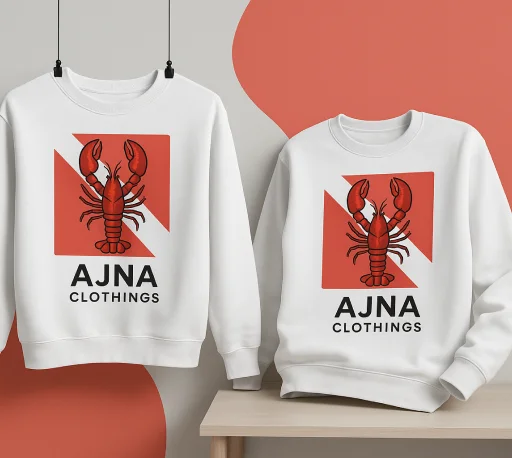
Manufacturers like Ajna Clothings often work behind the scenes, supporting production while sellers focus on marketing and customer engagement.
Common Challenges in Print on Demand (and How to Handle Them)
While POD is convenient, it’s not completely problem-free. Understanding the challenges helps avoid frustration later.
1. Cost Per Product
Since items are produced individually, the cost per piece is higher than bulk manufacturing. This means pricing needs to be planned carefully.
Solution:
Focus on value, design uniqueness, and brand storytelling rather than competing on low prices.
2. Quality Consistency
In POD, print quality, fabric feel, and finishing matter a lot because customers judge the brand based on a single product.
Solution:
Work with experienced manufacturers, request samples, and test prints before selling publicly.
3. Delivery Timelines
Unlike ready stock, POD orders take time to produce before shipping.
Solution:
Clearly communicate delivery timelines to customers and avoid over-promising fast shipping.
4. Limited Customisation Options
Not all POD setups offer the same fabrics, print techniques, or sizes.
Solution:
Choose product options that balance simplicity with customer demand.
Print Techniques Commonly Used in India
Understanding printing methods helps sellers make better product decisions:
- DTG (Direct to Garment): Good for detailed, colourful designs and small quantities
- Screen Printing: More suitable for bulk but sometimes adapted for limited POD runs
- Heat Transfer / Vinyl: Used for text-based or simple designs
The choice of technique affects durability, feel, and cost.
Is Print on Demand Profitable in India?
POD can be profitable, but expectations must be realistic. It works best when:
- You have a defined niche audience
- Designs offer emotional or cultural value
- Branding is consistent
- Marketing is done well
Instead of mass-market pricing, successful POD brands focus on identity, community, and storytelling.
When to Move Beyond Print on Demand
Many brands start with POD and later move to bulk manufacturing once demand is proven. POD helps validate ideas, while bulk production improves margins at scale.
Some manufacturers, including Ajna Clothings, support businesses at both stages,early testing and later expansion making the transition smoother.
Final Thoughts
Print on Demand in India is not a shortcut to instant success, but it is a practical entry point into the apparel and merchandise space. It reduces risk, encourages creativity, and allows entrepreneurs to learn the market without heavy upfront costs.
For creators who value flexibility and want to grow step by step, POD remains one of the most accessible business models available today.